Interactive poster wall
Turn static poster work into a browser or projected piece that reacts to motion, sound, touch, or time.
PFW ACM is a place to build interactive work with people who can help make it move, react, simulate, render, connect, and ship. You don't need to be a CS major..
Bring the part you already care about—illustration, typography, motion, 3D, sound, photography, storytelling, installation, interface design, fabrication—and use computing as another material.
You don't need to start with learning programming. Start with a medium or problem, then bring in the computing that makes it possible.
Concept art, 2D/3D assets, animation, VFX direction, interface art, environments, visual identity.
Engine integration, shaders, tools, procedural systems, performance, gameplay and asset pipelines.
These are collaboration proposals for possible student projects. A member can pitch one, recruit around it, or use it as a workshop theme.
Turn static poster work into a browser or projected piece that reacts to motion, sound, touch, or time.
Pair illustration, writing, sound and programming around one tightly scoped interactive story.
Build shaders, particles, dithered materials, stylized lighting, transitions and UI effects for a shared visual language.
Design a web-based or room-scale exhibit with unusual navigation, responsive media and accessibility built in.
Use sensors, motors, addressable lights or projected graphics as physical artistic material.
Create type that bends, fragments, responds, sonifies, reflows or behaves as a realtime system.
Build a plugin, brush engine, asset utility, pixel tool, color system or workflow helper around an artist-defined need.
Take an existing interface or exhibit and rethink its visual, motion, keyboard, contrast and screen-reader experience together.
Study metadata, fingerprints, crawler behavior and adversarial defenses that help artists retain control of online work.
Creative computing does not have to mean a dashboard or a utilitarian app. The browser can behave like a print surface, a typographic system, an animation engine, an instrument, a game space or an installation controller.
Quantized marks and granular physics turn pointer input into visible material behavior. This is the browser used as a responsive surface rather than as a container for controls.
Letters can be sampled into geometry, scattered and reassembled, or treated as a small statistical system. Here the text itself becomes the structure being computed.
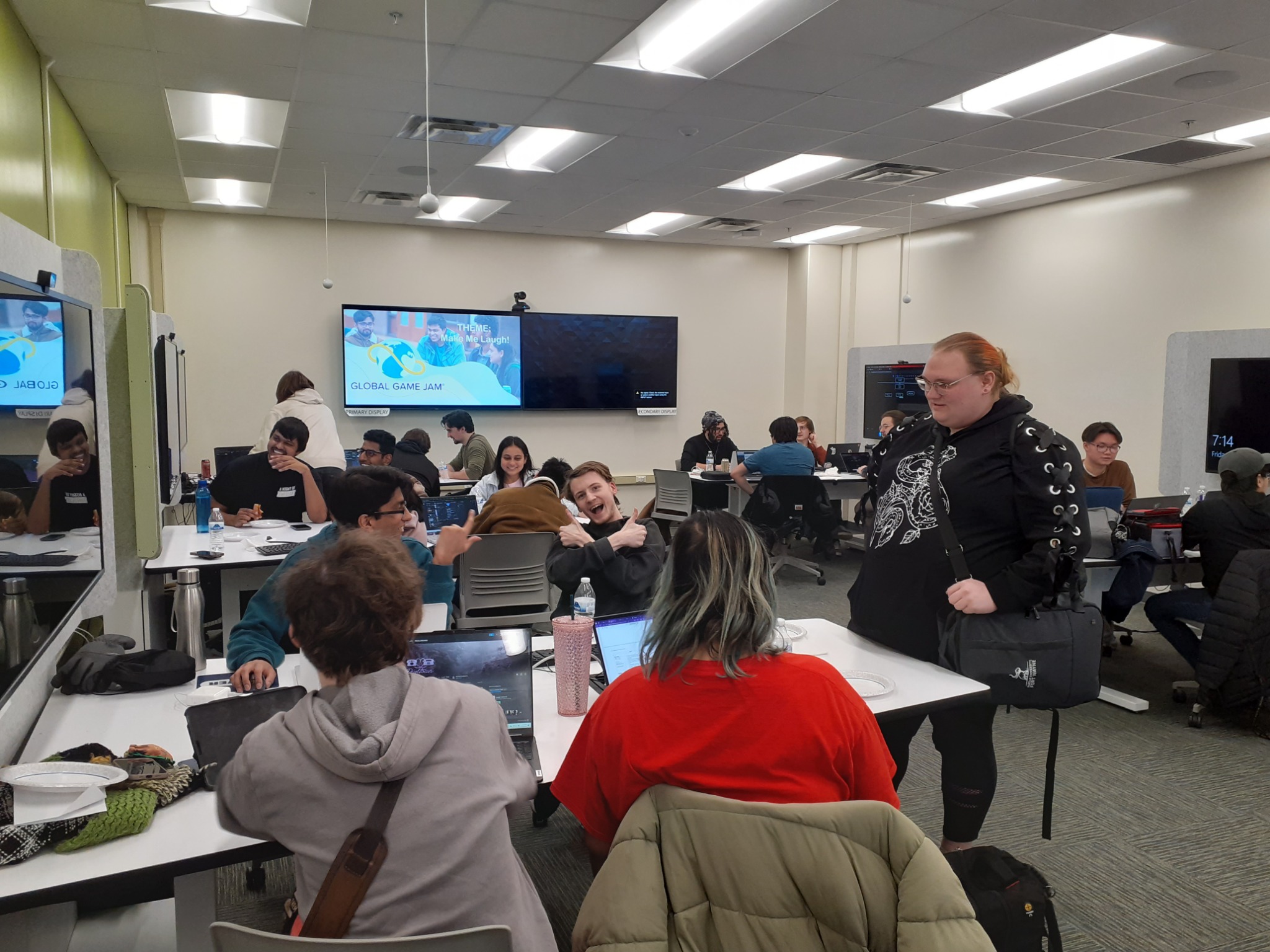
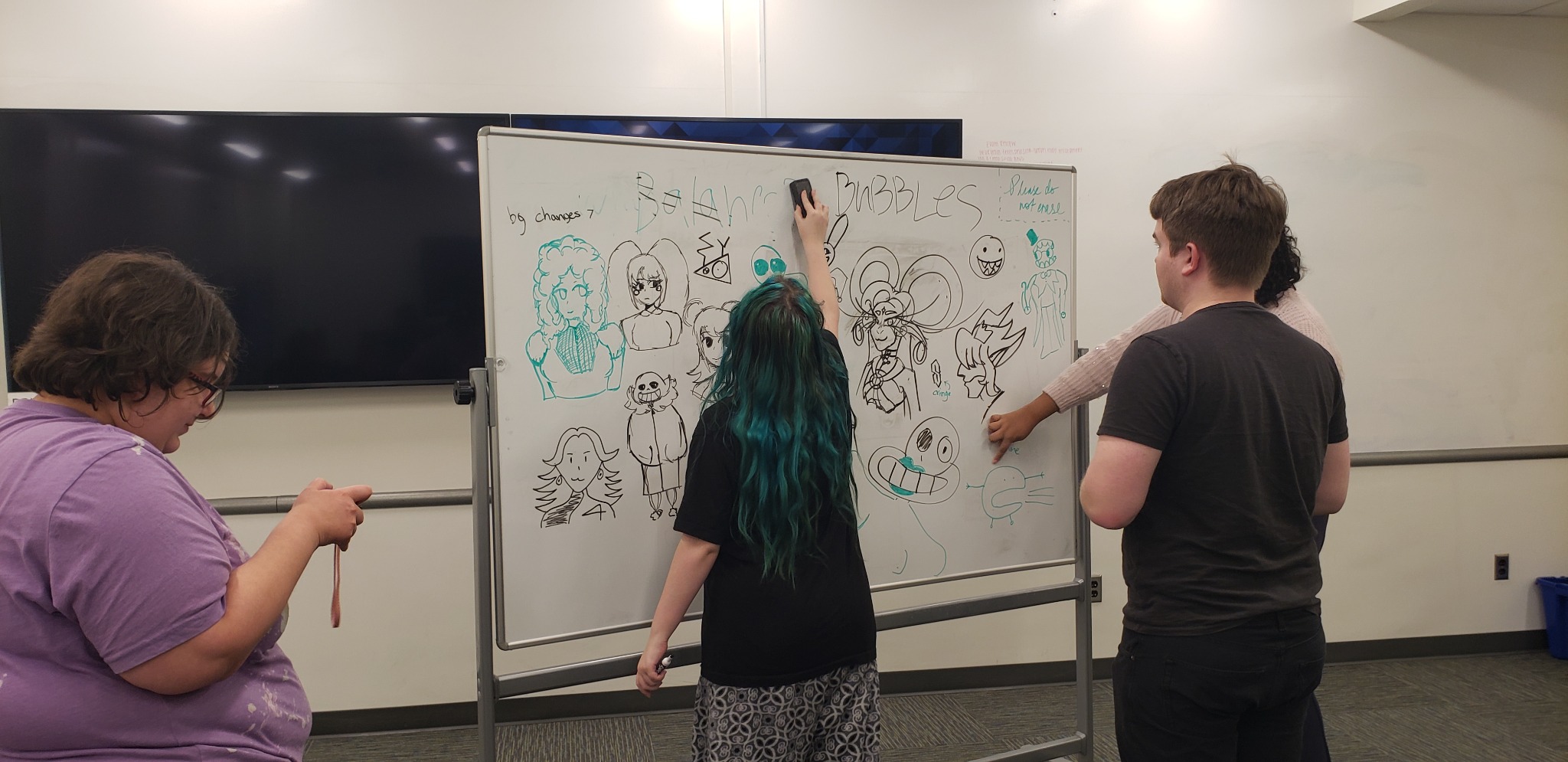
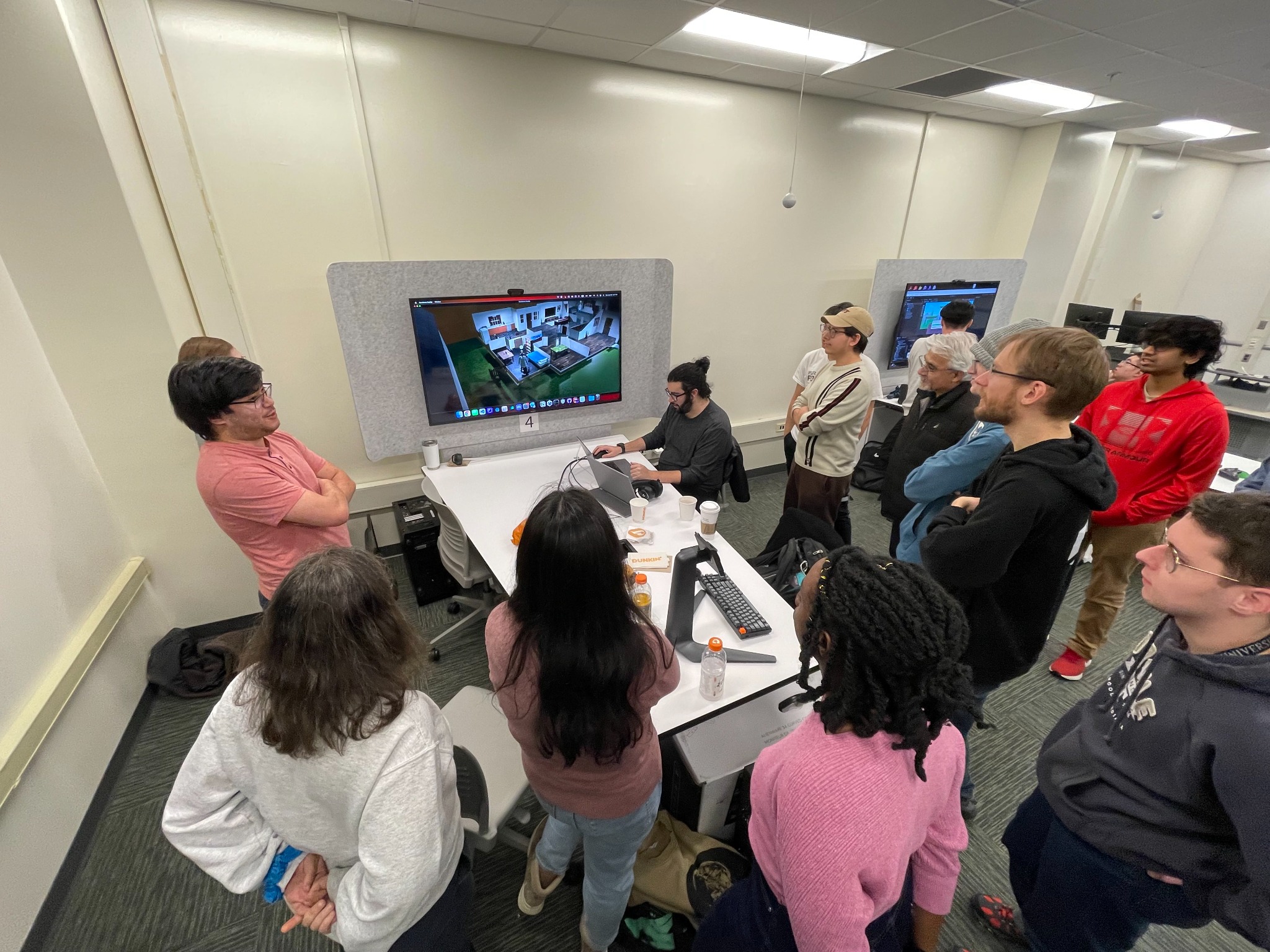
Our game jam is a short, practical example of cross-disciplinary work: teams need visual artists, designers, writers, musicians, organizers and programmers. It is useful because everyone has to make one thing together—not hand work across a departmental wall.
For artists, the useful AI-adjacent questions are defense, consent, provenance and control: keeping authorship legible and creative work harder to appropriate without permission.
Participation is optional and project-driven. You can come to one workshop, find a programmer for a piece, propose a collaboration, or spend a semester learning a new creative tool with other students.